The Web3 Marketer's AI Stack for 2026
The exact categories of AI tools a lean Web3 marketing team needs in 2026 — from brand brain to distribution — and how to wire them together.
By Dylan Morrow
 Journalweb3
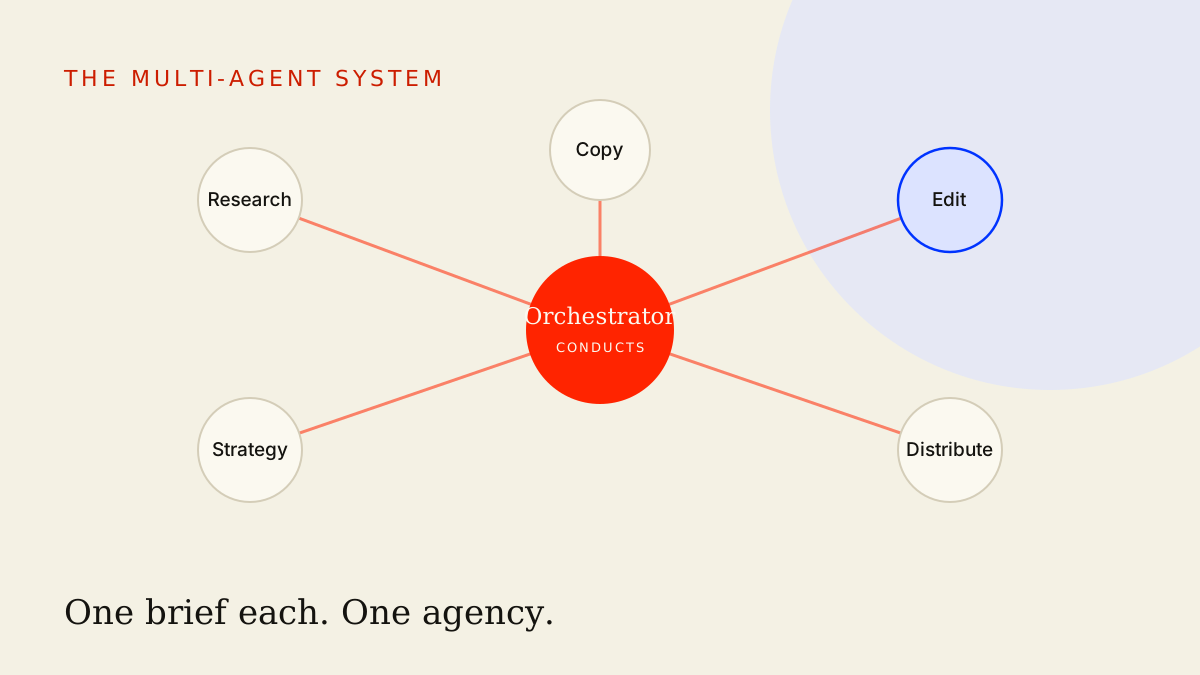
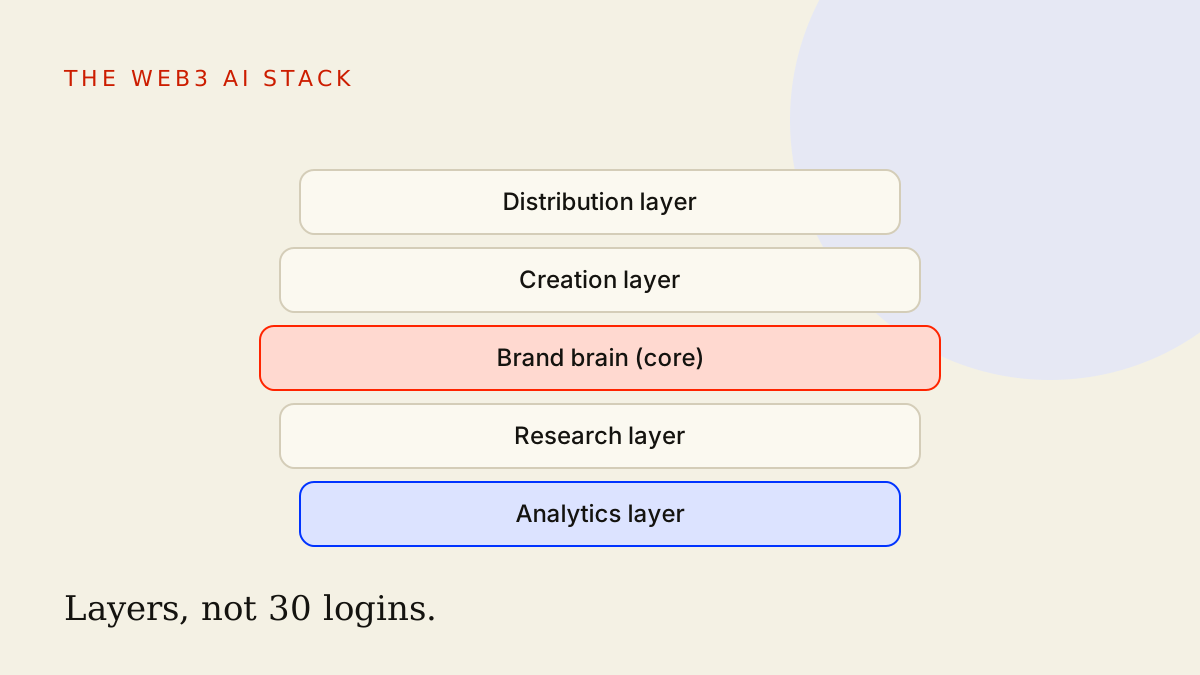
A lean Web3 team does not need 30 tools. It needs five layers wired together, with one AI model and a brand brain sitting at the center. The teams winning in 2026 are not the ones with the biggest tool bill — they are the ones who turned Claude or ChatGPT into an orchestrator that knows their brand and plugs into the right job at the right moment.
TL;DR
- Stop thinking in tools. Think in five layers: brand brain, research, creation, distribution, analytics.
- Your core is one AI model + a brand brain + connectors. Everything else plugs into a role.
- Web3 changes the weights, not the layers: community-native channels, brutal news cycles, and compliance pressure.
- A small team should build in order — brand brain first, analytics last — not buy everything at once.
- The competitive edge is orchestration, not the logo on your tool.
The five layers of an AI marketing stack
Every marketing job a Web3 team does falls into one of five layers. Each layer feeds the next. If you skip a layer, the one after it gets weaker.
| Layer | Job to be done | Example tool categories | Feeds into |
|---|---|---|---|
| 1. Brand brain | Hold positioning, voice, claims, audience | Docs, vector store, model project files | Everything |
| 2. Research | Know the market, narrative, and competitors | Web search, on-chain data, social listening | Creation |
| 3. Creation | Turn intent into assets | LLMs, image/video gen, design tools | Distribution |
| 4. Distribution | Get assets to the right channel on time | Schedulers, Discord/X bots, email | Analytics |
| 5. Analytics | Measure what worked, feed it back | Dashboards, attribution, on-chain metrics | Brand brain |
Layer 1: The brand brain
This is the layer everyone skips, and it is the one that makes every other layer better. The brand brain is a single source of truth: your positioning, your voice, your audience segments, your offers, your banned claims, and your best-performing past content.
How to choose: It is not a product — it is a structured document (or project/knowledge base inside your AI model) that you load into every task. The model is only as good as the brand brain you feed it. Get this right and a generic LLM sounds like your brand. Skip it and you get bland AI slop that any other project could have written.
It connects to the next layer because research is only useful when it is filtered through your positioning.
Layer 2: The research layer
This layer answers "what is happening and what should we say about it?" For Web3 specifically that means three feeds: market narrative (what's trending on X and in Discords), on-chain reality (what's actually happening with the protocol, TVL, holders), and competitor moves.
How to choose: You want categories that surface primary signal — web search and live data over recycled summaries. Connect your AI model to a search connector so it can pull current information instead of guessing from stale training data.
It connects forward because research without creation is just a tab you never read.
Layer 3: The creation layer
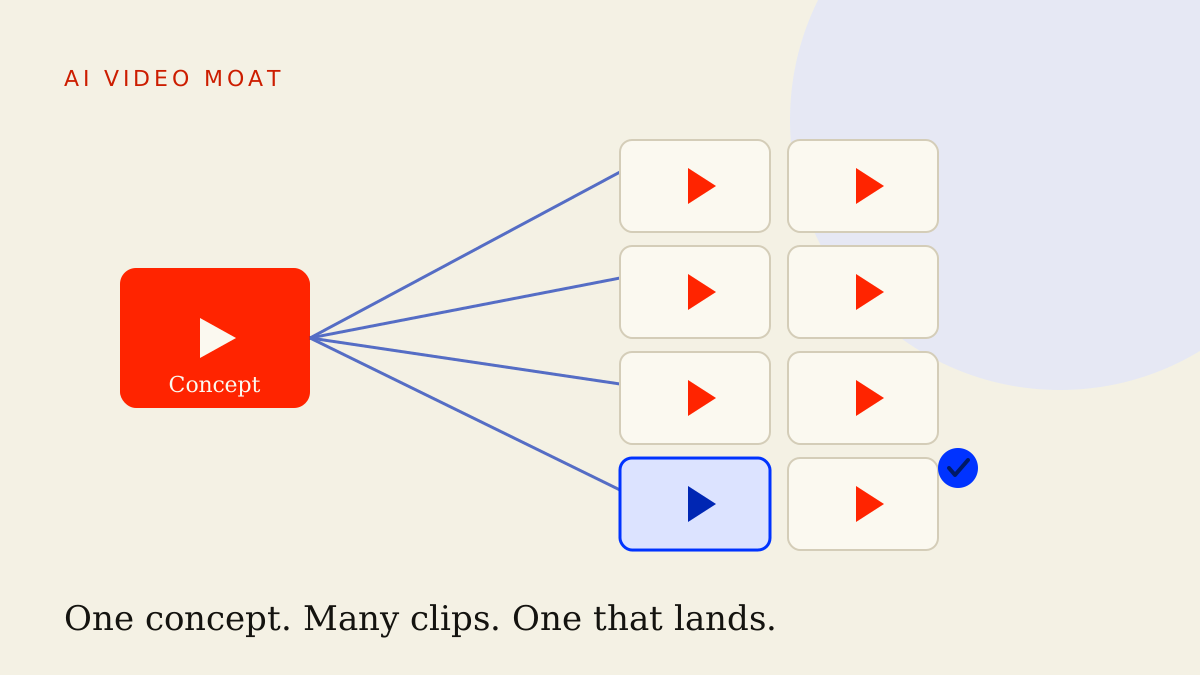
This is where intent becomes assets: threads, long-form, scripts, images, video, landing copy. The LLM is the workhorse here, supported by image and video generation and design tools for the visual side.
How to choose: Pick tools that accept structured input from your brand brain. A great creation tool is one you can brief precisely, not one with the flashiest demo. Speed matters less than consistency on-brand at volume.
It connects forward because an asset that never ships is worthless — creation must hand off cleanly to distribution.
Layer 4: The distribution layer
Getting the right asset to the right channel at the right time. For Web3 this is X, Discord, Telegram, Farcaster, and email — often all at once during a launch.
How to choose: You want schedulers and channel integrations that respect each channel's native format. Repurposing a thread into a Discord announcement is a transformation, not a copy-paste, and your AI model should do that transformation before distribution.
It connects forward because you cannot improve what you do not measure.
Layer 5: The analytics layer
The loop-closer. What got engagement, what drove wallet connects, what converted to mint or trade. The job is not dashboards for their own sake — it is feeding learnings back into the brand brain so next month's content starts smarter.
How to choose: Prioritize tools that combine off-chain engagement with on-chain outcomes. Then have your AI model summarize the data into updates for Layer 1.
The core: model + brand brain + connectors
Here is the part most "AI stack" posts get wrong. The five layers are not five products you buy — they are roles a small core fills.
Your core is three things:
- One AI model (Claude or ChatGPT) as the reasoning engine and orchestrator.
- A brand brain loaded into that model on every task.
- Connectors that let the model reach research, creation, distribution, and analytics tools.
With that core, the model is the glue across all five layers. You add a dedicated tool only when a specific role clearly outperforms the model alone — video generation, scheduling, on-chain data. Everything plugs into a role; nothing replaces the core.
Use this prompt to map your own stack:
Act as my marketing ops architect. I run marketing for a Web3 project.

Here is my brand brain: [paste positioning, voice, audience, offers, banned claims].
Here is my current toolset: [list every tool you pay for].
Here are my channels: [X, Discord, Telegram, Farcaster, email, etc.].

Map my setup against the five layers: brand brain, research, creation,
distribution, analytics. For each layer:
1. Tell me what role is filled, by what, and how well.
2. Flag any layer where I'm over-tooled or have a gap.
3. Show how data should flow from one layer to the next.
4. Recommend the single highest-leverage change I can make this week.

Be specific and tactical. No generic advice.
Web3-specific considerations
The layers are universal. What changes for crypto is the emphasis.
- Community-native is the default channel. Your distribution layer leans Discord, X, Telegram, and Farcaster far more than email or SEO. Content has to feel native to a Discord pin or an X reply guy, not like a press release.
- News cycles are brutal. A narrative can flip in hours. Your research layer needs to be live, and your creation-to-distribution path needs to be fast enough to ship a reaction post the same day — without your brand brain going out the window.
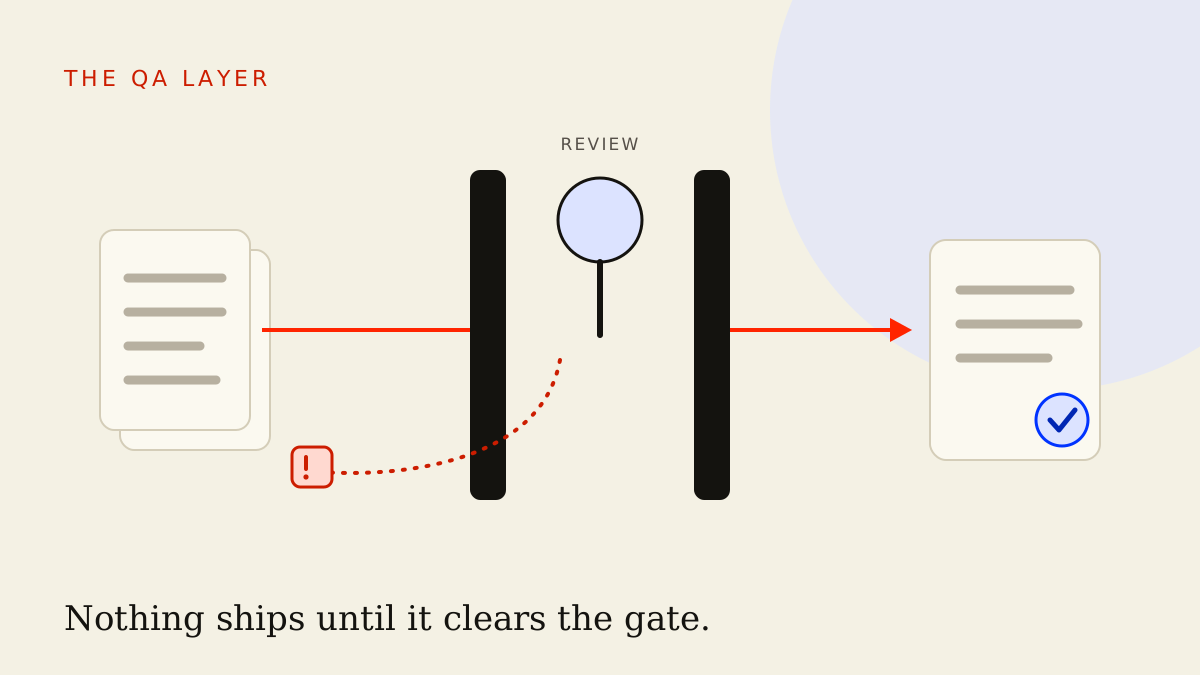
- Compliance and claims care is non-negotiable. This is the Web3-specific layer most teams ignore until it bites them. Bake a claims pass into your stack: banned phrases (guaranteed returns, price predictions, "risk-free"), required disclaimers, and a rule that unverified partnerships and numbers get flagged for human review before anything ships. Put these rules directly in the brand brain so every generated asset is checked against them automatically.
Build order for a small team
Do not buy everything at once. Build the layers in this order so each one makes the next more valuable.
- Brand brain first. Spend a day writing it. This single document multiplies the quality of everything downstream.
- Add the model + connectors. Load the brand brain into Claude or ChatGPT and connect web search. You now have research and creation in one move.
- Wire distribution. Add a scheduler and channel integrations once you are producing more content than you can post by hand.
- Add specialized creation tools. Bring in image, video, or design tools only when text-plus-model is clearly your bottleneck.
- Close the loop with analytics last. Once you are shipping consistently, add measurement and feed results back into the brand brain.
Most teams do this backwards — they buy analytics dashboards and video tools before they have a brand brain or a publishing rhythm. Build front to back.
Key takeaways
- Organize your stack by layer and job-to-be-done, not by product logos.
- The core is a model + brand brain + connectors — tools plug into roles, they do not replace the core.
- For Web3, weight distribution toward community channels, keep research live, and make compliance a built-in pass.
- Build front to back: brand brain first, analytics last.
- Orchestration is the moat. The team that wires five layers together beats the team with twice the tools.
Ready to build the orchestrated stack instead of collecting tools? Start with the curriculum to set up your brand brain and core, browse the skills hub for the specific roles in each layer, and read the orchestration playbook to wire it all together.
Frequently asked
- Do I need a separate AI tool for every marketing task?
- No. You need an AI model plus a brand brain plus a few connectors as your core, then a small number of specialized tools that plug into specific roles. Most teams over-buy tools and under-build the layer that ties them together.
- What is a brand brain and why does it matter for Web3?
- A brand brain is a single source of truth that holds your positioning, voice, banned claims, audience, and offers, which you feed into the model on every task. In Web3 it is critical because it keeps fast-moving community and news content on-message and compliant.
- Should a small crypto team use Claude or ChatGPT?
- Either works as the core reasoning layer, and many teams run both for different jobs. Pick one as your default orchestrator, load your brand brain into it, and only add the second when a specific task clearly performs better there.
- How do I keep AI-generated crypto content compliant?
- Put a claims-and-compliance pass in your stack before anything ships, with banned phrases and required disclaimers written into your brand brain. Have the model flag price predictions, guaranteed-return language, and unverified partnerships for human review.
This is the thinking. The systems are the proof.
See how these ideas ship as working infrastructure.