The AI Marketing Orchestration Playbook for 2026
One-off prompts leave money on the table. Here's the 2026 playbook for orchestrating Claude and ChatGPT into a marketing system that runs your workflow.
By Dylan Morrow
 Journalai marketing
You can feel the ceiling. You write a clever prompt, get a decent draft, tweak it twice, and ship. Then tomorrow you open a blank chat and do the whole dance again, from scratch, forever.
That's the trap of one-off prompting: it saves you minutes while orchestration saves you entire workflows. This is the playbook for crossing that gap in 2026.
TL;DR
- One-off prompting is a calculator. Orchestration is a spreadsheet that recomputes your whole workflow when one input changes.
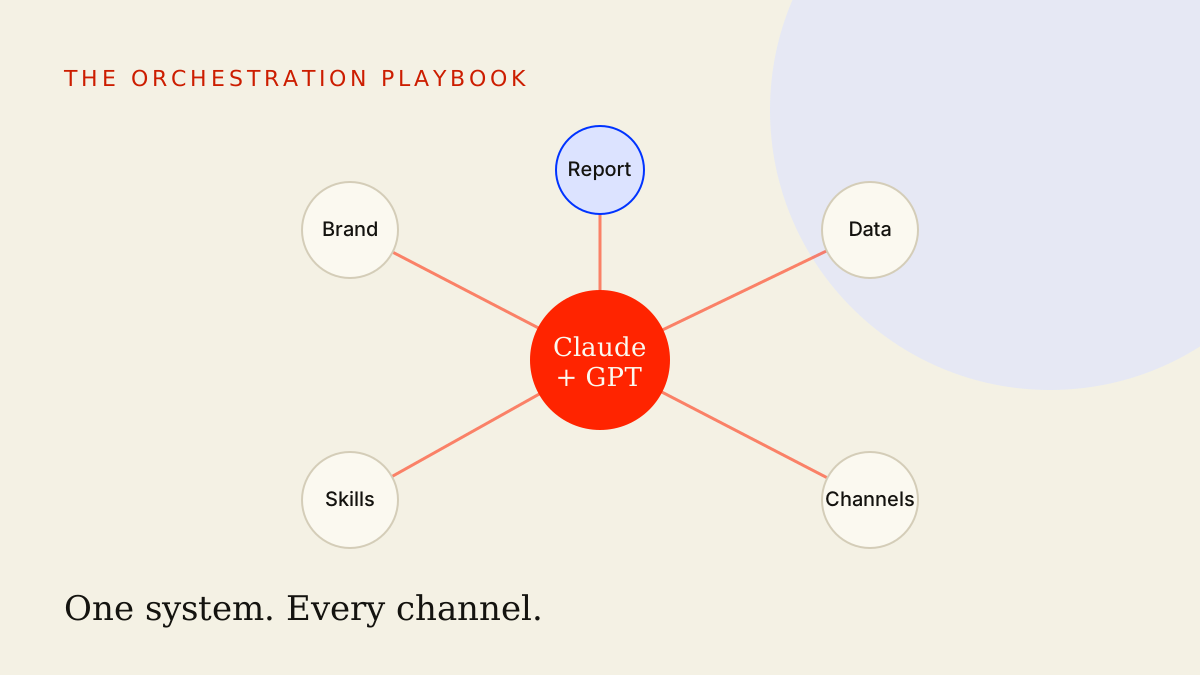
- The system has four building blocks: a brand brain, reusable skills, connectors (MCP), and multi-step pipelines.
- Brand brain first. It's the cheapest, highest-leverage thing you can build, and every prompt after it gets better for free.
- A real campaign should flow through the system end to end: research → strategy → draft → repurpose → distribute with minimal hand-holding.
- The skill that matters in 2026 isn't prompt writing. It's designing the system the prompts run inside.
Why one-off prompting hit a wall
Most marketers are still using AI like a vending machine. Insert prompt, receive output, repeat.
It works, but it leaks value everywhere. The model forgets your brand voice. It doesn't know your last campaign. It can't see your docs, your CRM, or your analytics. Every session starts at zero.
Orchestration fixes the leak by giving AI three things it normally lacks: memory, procedure, and reach. Memory of who you are. Procedures for how you work. Reach into the tools where your work actually lives.
When those exist, you stop prompting tasks and start running systems.
The four building blocks
Think of orchestration like running a small team. You give them context, you give them playbooks, you give them tools, and you give them a process. Here's the AI version.
1. The brand brain (persistent context)
This is one living document that defines who you are: voice, audience, positioning, offers, banned phrases, competitors, and proof points.
You attach it to every session, store it as a custom instruction, or load it as a project file. The point is that the AI never starts cold again.
Build it once and every downstream output inherits it. A weak brand brain is why generic AI content sounds generic.
2. Skills (reusable procedures)
A skill is a saved, named procedure the AI runs the same way every time: "Write a thread," "Audit a landing page," "Turn a blog into 5 posts."
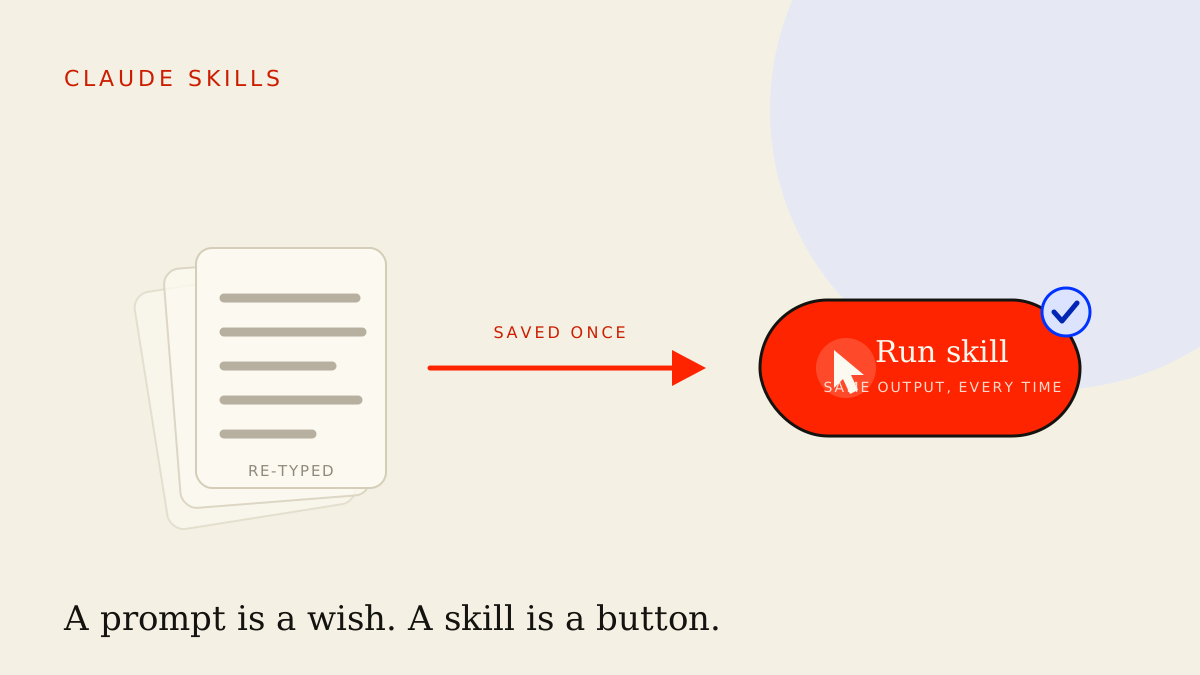
Instead of re-explaining your formatting rules and structure on every request, you encode them once. The skill becomes a button you press.
Good skills are specific and opinionated. "Write a tweet" is a wish. "Write a 5-tweet thread, hook in line one, no hashtags, one concrete example per tweet" is a skill.
3. Connectors and MCP (reach into tools)
Connectors let the AI read and write to your real tools: your docs, calendar, analytics, project tracker, even on-chain data. MCP (Model Context Protocol) is the open standard making this plug-and-play in 2026.
This is the leap from "AI that talks about your work" to "AI that does your work." It pulls last week's numbers, drafts in your doc, files the task.
For Web3 marketers, this is huge: pipe in wallet activity, governance proposals, or token metrics so the AI writes from live reality instead of guesses.
4. Pipelines (multi-step chains)
A pipeline strings skills and connectors into a sequence where each step's output feeds the next.
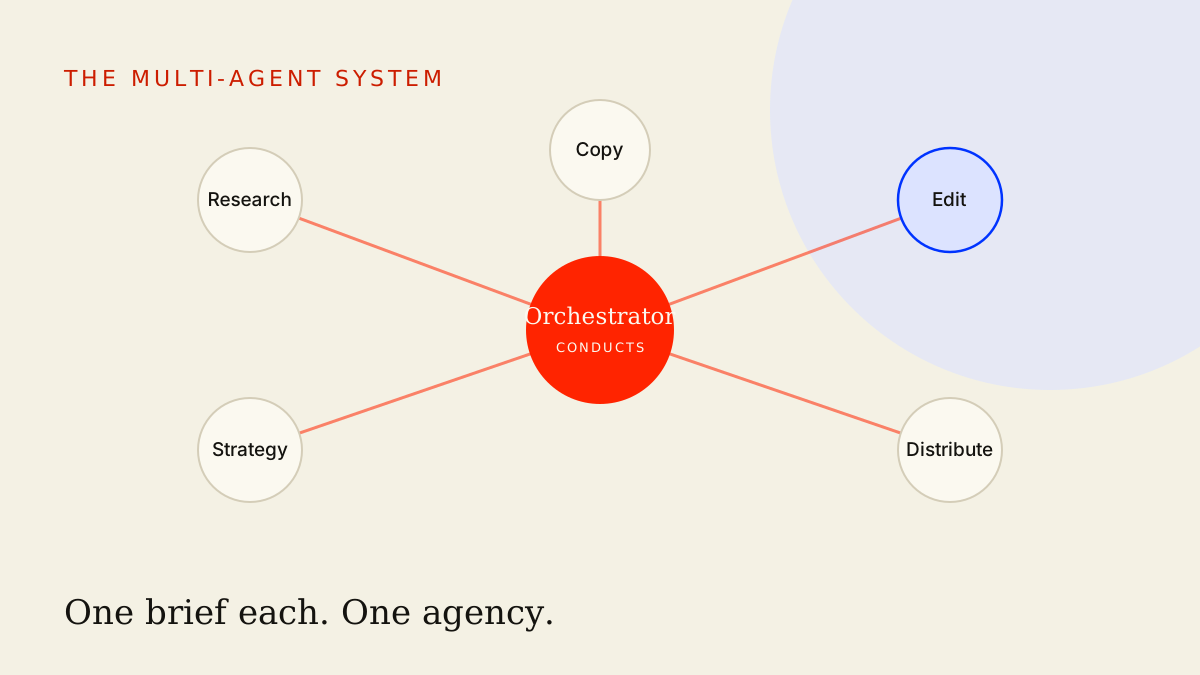
Research feeds strategy. Strategy feeds the draft. The draft feeds the repurposing. The repurposed assets feed distribution. You kick it off once and review at the end.
This is where the time actually compounds. A single prompt saves a minute. A five-step pipeline saves an afternoon, every time you run it.
How the blocks combine: a framework
Here's the order to build in. Do not skip steps, and do not start with pipelines.
- Write the brand brain. One doc, plain language. Voice, audience, offers, rules. This is your foundation.
- Codify your top 3 skills. Pick the things you do weekly. Write each as an explicit procedure with inputs and a defined output format.
- Connect one tool. Start with where your content lives (a doc or notes app). Prove the AI can read and write there.
- Chain two skills into a mini-pipeline. For example: "audit post" then "rewrite post." Watch the handoff work.
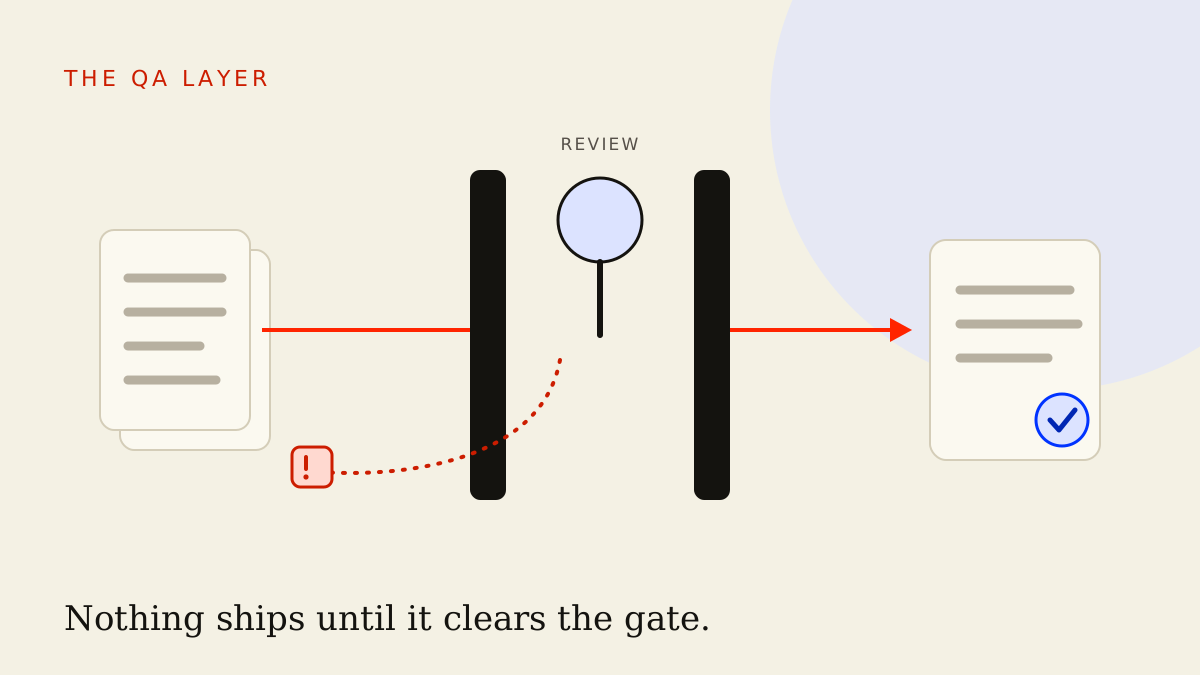
- Add review gates. Decide which steps run automatically and which need your eyes before they proceed.
- Expand outward. More connectors, longer chains, more skills, only after the small system is reliable.
The mistake is building the cathedral first. Start with a working two-step chain, then grow it.
A campaign running through the system
Picture launching a new feature. In a one-off world, you'd open ten chats. In an orchestrated world, you run one pipeline.
Here's a starter prompt that turns a brand brain plus a brief into a sequenced plan. Paste your brand brain above it.
You have my brand brain above. Act as my campaign orchestrator.

Input: I'm launching [feature/product] to [audience] on [date].
Primary goal: [signups / TVL / waitlist / etc].

Run these steps in order and label each output clearly:
1. RESEARCH: 5 angles competitors aren't using, each with the reason it works.
2. STRATEGY: pick the single strongest angle and a 3-beat narrative.
3. ASSETS: one long-form post, one X thread (hook-first, no hashtags),
   one short email — all in my voice from the brand brain.
4. REPURPOSE: 5 standalone short posts pulled from the assets above.
5. CALENDAR: a 7-day posting schedule mapping each asset to a day and channel.

After each step, pause and ask if I want changes before continuing.
That single run replaces a research session, a strategy doc, three drafting sessions, a repurposing grind, and a calendar build.
Want the AI to grade its own work before you ever read it? Add a critique skill as the final gate.
Before you show me the assets, run this self-audit and fix anything that fails:

- Voice match: does each piece sound like the brand brain, not generic AI?
- Specificity: does every claim have a concrete example or number? Cut vague lines.
- Hook test: would line one stop a scroll? If not, rewrite it.
- One idea per piece: kill anything trying to say two things at once.

Show me the BEFORE/AFTER for any line you changed, then the final assets.
Now the AI ships you a reviewed draft, not a first draft. That's the difference orchestration makes.
Key takeaways
- Stop treating AI like a vending machine. Build it a system to run inside.
- The four blocks are brand brain, skills, connectors/MCP, and pipelines — in that build order.
- Brand brain first, pipelines last. Foundation before the cathedral.
- The compounding happens in the chain. One pipeline can collapse a full campaign workflow into a single guided run.
- The 2026 edge isn't writing better prompts. It's architecting the workflow the prompts execute.
The marketers who win the next year aren't the ones with the cleverest single prompt. They're the ones who built the machine that runs while they sleep. Start by mapping your four blocks in the curriculum, grab ready-made procedures from the prompt library, then go build your first end-to-end chain with our walkthrough on building your first AI workflow.
Frequently asked
- What is AI marketing orchestration?
- Orchestration is wiring AI into a repeatable system instead of asking it one question at a time. It combines persistent brand context, reusable skills, connected tools, and multi-step pipelines so the AI executes whole workflows rather than single tasks. The payoff is saving entire processes, not just minutes.
- How is orchestration different from just prompting ChatGPT or Claude?
- A prompt is a single request that starts from zero every time and forgets your brand, your data, and your last 50 conversations. Orchestration gives the AI standing context, defined procedures, and access to your real tools so output is consistent and ready to ship. You stop re-explaining yourself and start shipping.
- Do I need to be technical to orchestrate AI for marketing?
- No. The brand brain and skills are written in plain language, and connectors like MCP are increasingly point-and-click inside the AI apps themselves. You need clear thinking about your own workflows far more than you need to code.
- What should I build first?
- Start with the brand brain, a single document of voice, audience, offers, and rules that you paste or attach to every session. It is the highest-leverage hour you can spend because every prompt afterward gets sharper for free. Add one skill and one pipeline once that foundation is in place.
This is the thinking. The systems are the proof.
See how these ideas ship as working infrastructure.